
Concrete Floor Coatings in Wollongong & the Illawarra
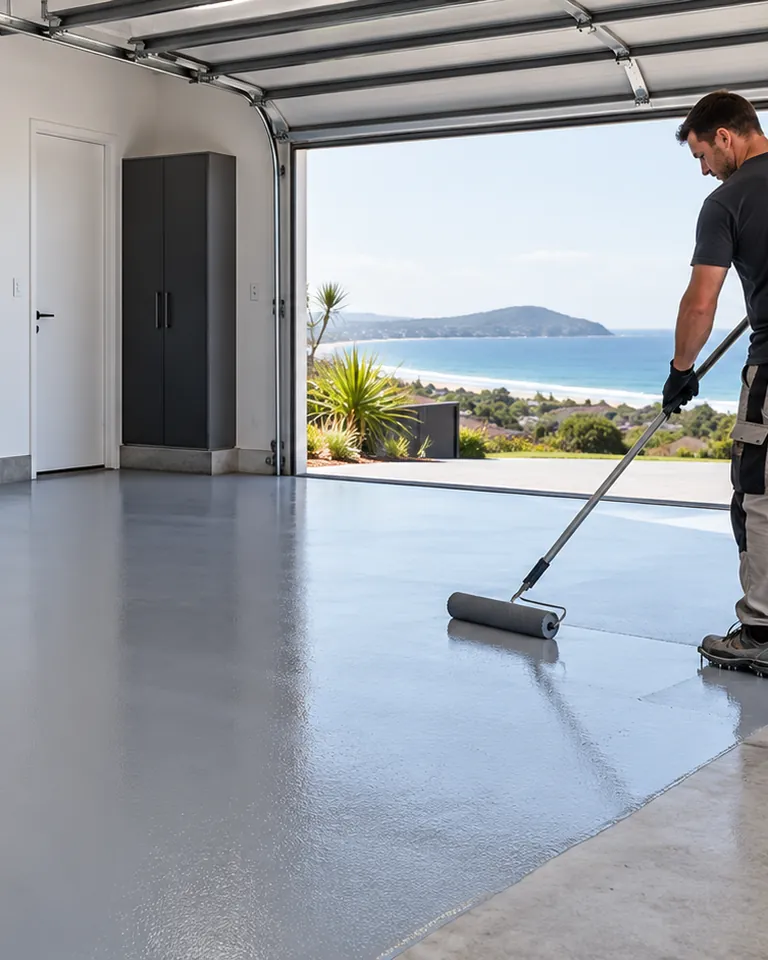
From clear sealers to full epoxy and polyaspartic systems, the right coating depends on the slab, how it is used and how much protection you need. Tell us about your concrete and we’ll arrange a free quote from a local epoxy specialist.
- Free quotes
- Sealers, epoxy and fast-cure systems compared
- UV-stable options for sun-exposed areas
Which concrete needs a coating?
Bare concrete dusts, stains and soaks up spills. A coating or sealer protects it and makes it easier to clean, whether it is a garage in Corrimal, a laundry in Dapto or a workshop in Albion Park.
Good for
- Garages, carports and workshops
- Laundries, storerooms and utility areas
- Shops, offices and back-of-house areas
- Warehouses and factory floors
- Covered outdoor areas, with a UV-stable system
Problems it fixes
- Dusting concrete
- Oil, food and chemical stains
- Porous floors that are hard to clean
- Worn or patchy previous sealers
- Dull, uneven concrete
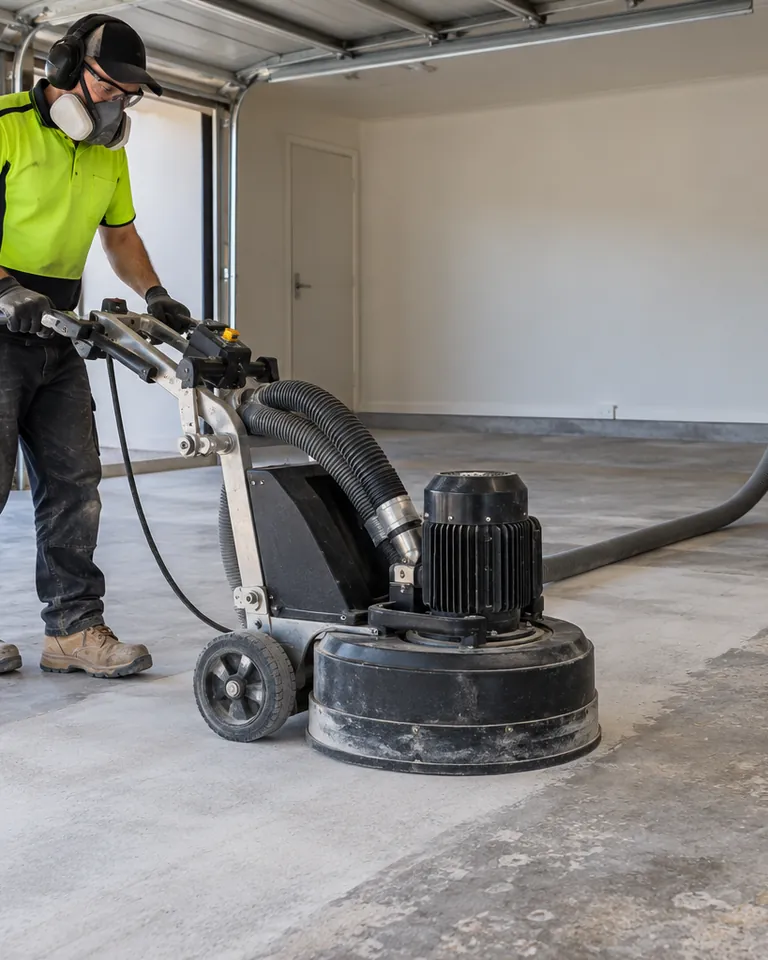
Every coating needs a sound surface
Even a clear sealer needs clean, open concrete to soak into or bond to. Thicker coatings need more: diamond grinding, removal of old sealers and coatings, crack repairs and moisture checks.
Ask your installer what preparation is included for the coating they propose, and why.
Concrete grinding and preparation · Repairs and coating removal
Types of concrete coating
These are the main options, from the lightest protection to the most durable. Your installer will recommend one based on your slab and how you use it.
| Coating | What it is | Suits | Worth knowing |
|---|---|---|---|
| Penetrating sealer | Soaks into the concrete and leaves little or no surface film | Light-use areas where a natural look is wanted | Reduces dusting and staining but gives limited protection; needs reapplying |
| Clear epoxy or sealer coat | A thin clear film over the concrete | Workshops and storerooms | Better stain resistance than a sealer; still shows the concrete underneath |
| Epoxy coating systems | Coloured or flake epoxy, thicker and harder-wearing | Garages, commercial and industrial floors | Strong and chemical resistant; standard epoxy yellows in sunlight |
| Polyaspartic and polyurethane | Fast-curing or UV-stable coatings and topcoats | Sun-exposed areas and fast turnarounds | Cures quickly and resists UV, but usually costs more and needs skilled application |
What a coating job usually involves
A sealer can take a day, and a full coating system usually takes two or more. Your installer will confirm timing for the coating they propose.
Cure times
Cure times vary widely between sealers, epoxies and fast-curing systems. Ask your installer when the floor can take foot traffic, vehicles and full use.
- Assess the slab. Condition, moisture, old coatings and how the floor is used.
- Prepare. Grinding or cleaning, coating removal and repairs.
- Apply. Sealer, or primer, body coat and topcoat for a full system.
- Cure and handover. Cure time, then care instructions for the coating.
What a coating does well
- Stops dusting and seals the surface
- Makes spills easier to clean up
- Brightens and evens out the floor
- Can extend the life of the concrete surface
Worth knowing
- Outdoor and sun-exposed concrete needs a UV-stable system, not standard epoxy
- Sealers need reapplying more often than coatings
- Glossy coatings can be slippery when wet without an anti-slip additive
- Damp slabs need moisture testing first
What affects the price
The type of coating makes the biggest difference. These are the main factors.
- Coating type and thickness
- Floor area
- Preparation, old coating removal and repairs
- UV-stable or fast-cure products
- Access and timing
Looking after a coated floor
Sweep regularly, mop with a cleaner suited to the coating, and deal with spills promptly. Sealers usually need reapplying every few years, while full coating systems may need a fresh topcoat in heavy traffic areas.
Ask your installer for care instructions in writing for the product used.
Related services
Concrete coating quotes across the Illawarra
Surrounding areas on request.
Concrete coating questions
Is a sealer enough, or do I need epoxy?
A sealer reduces dusting and staining on light-use floors. Garages, workshops and commercial floors usually need a thicker coating system for wear and chemical resistance.
Can epoxy be used on outdoor concrete?
Standard epoxy yellows and breaks down in sunlight. Outdoor and sun-exposed areas need a UV-stable system, such as polyaspartic or polyurethane. Ask your installer which product they propose.
What is polyaspartic?
A fast-curing coating that is UV stable. It can shorten downtime and suit sun-exposed areas, but usually costs more than epoxy.
Can a coating go over old sealer?
Old sealers usually need to be ground off so the new coating can bond. Your installer will test what is there.
Will a coating stop cracks?
No. Cracks are repaired before coating, but cracks that are still moving can reappear through any coating.
Get a quote for your concrete floor
Tell us the suburb, the area to be coated and how it is used. Photos of the concrete help us recommend the right coating.
Get a free quote
Four details are all we need to get started. A local epoxy specialist will contact you to arrange your free quote.