
Concrete Grinding & Surface Preparation for Epoxy Floors
Preparation is the part of an epoxy floor you never see, and the part that decides whether it lasts. Find out what proper grinding and slab preparation involve, and get a free quote from a local epoxy specialist across the Illawarra.
- Free quotes
- Diamond grinding with dust extraction
- Moisture and slab checks explained
Why preparation matters
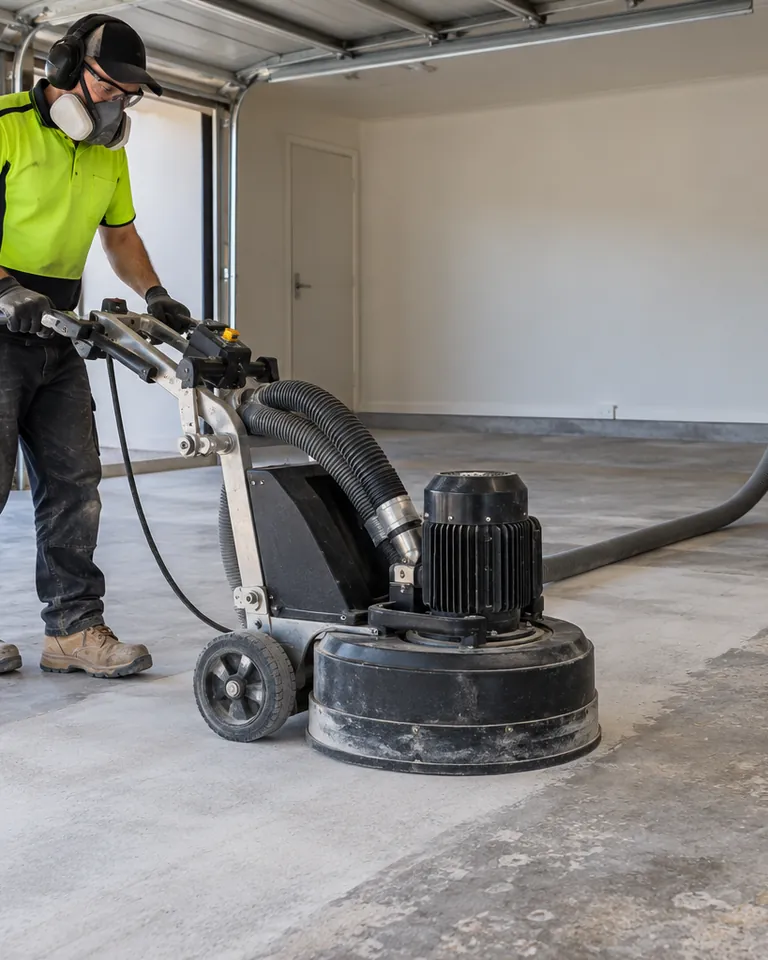
Most epoxy floors that peel, bubble or lift failed because of what happened before the first coat. Grinding opens up the concrete so the coating can grip it, and removes anything that would stop it bonding.
Preparation should cover
- Diamond grinding the whole floor, including edges
- Removing old paint, sealers and coatings
- Cleaning out oil and contamination
- Repairing cracks, chips, joints and spalling
- Checking the slab for moisture
- Vacuuming the floor dust-free before coating
Signs a floor was poorly prepared
- Coating peeling at the edges or under tyres
- Bubbles or blisters appearing after a few months
- Patches lifting where oil or old paint was
- Cracks showing straight through the coating
- A floor that was only acid etched or cleaned
Diamond grinding, explained
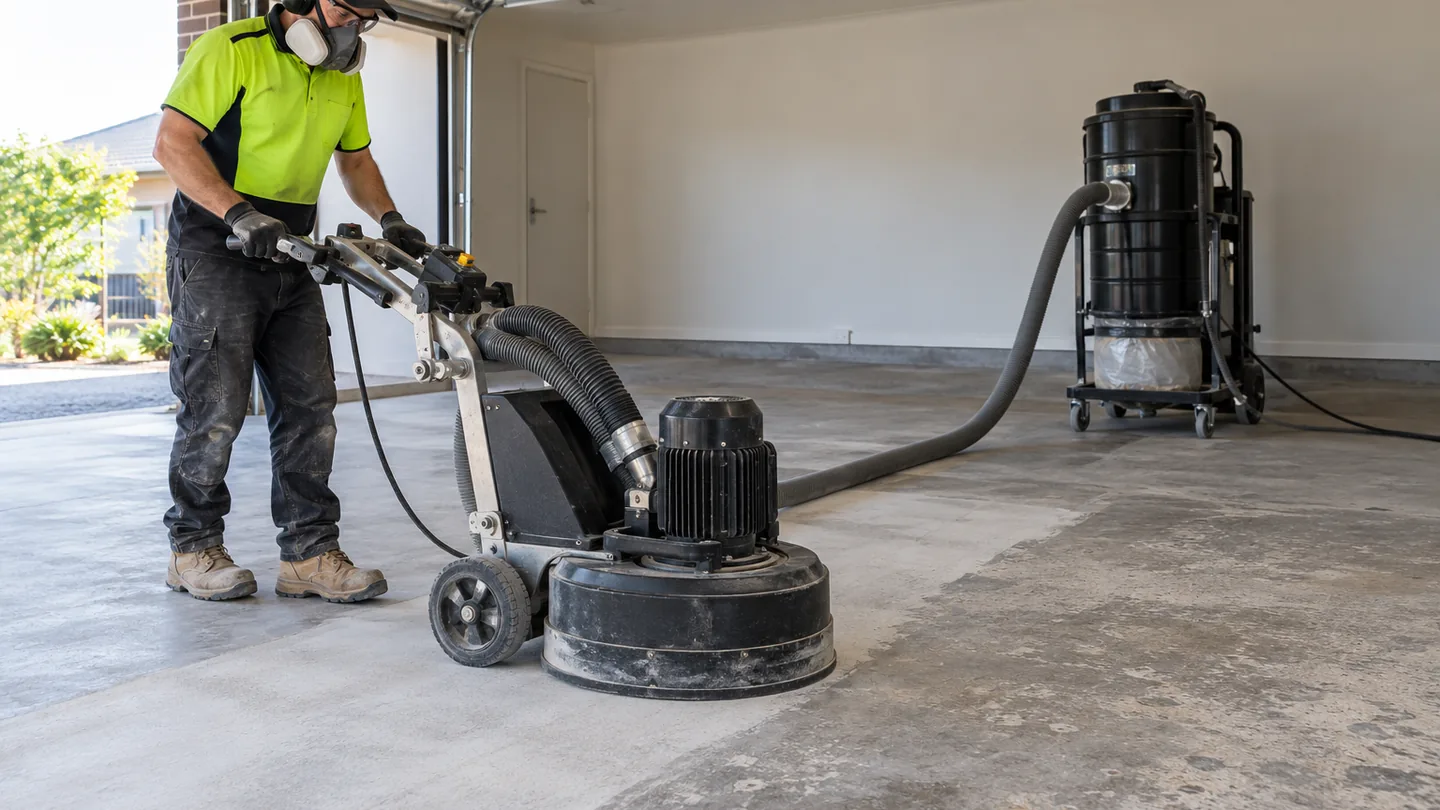
A diamond grinder uses rotating diamond tools to cut back the top layer of the slab, removing laitance, sealers and old coatings and leaving a clean, open surface profile. Edges and corners are done with smaller hand grinders.
Industrial-grade dust extraction keeps the dust down. Ask your installer what equipment they use and how they manage dust in occupied spaces.
Preparation methods compared
The right method depends on the slab, any existing coating and the system going on top. Ask your installer which they propose and why.
| Method | What it does | Suits | Worth knowing |
|---|---|---|---|
| Diamond grinding | Cuts back the surface with diamond tools | Most garage, commercial and industrial floors | The standard preparation for epoxy; dust extraction is essential |
| Shot blasting | Blasts the surface with steel shot | Large industrial floors | Fast on big open areas; less suited to small rooms and edges |
| Scarifying or planing | Removes thicker layers and heavy coatings | Thick old coatings and uneven slabs | Leaves a rough profile that may need levelling |
| Acid etching | Chemically roughens the surface | Not recommended for epoxy floors | Does not remove sealers or contamination reliably; a common cause of peeling |
What preparation usually involves
Preparation usually takes a large share of the time on site. On many garage floors it is most of the first day.
Cure times
Repair materials need time to cure before coating. New slabs also need to cure, often about four weeks, and may need a moisture test first.
- Inspect and test. Slab condition, contamination, old coatings and moisture are checked.
- Remove old coatings. Paint, sealers and failed coatings are ground or stripped off.
- Grind the floor. The whole slab is diamond ground, with edges done by hand.
- Repair. Cracks, chips, joints and spalled areas are filled and ground flush.
- Clean. The floor is vacuumed dust-free, ready for the primer or base coat.
What good preparation gives you
- A strong bond between coating and concrete
- Fewer bubbles, blisters and lifting edges
- A flatter, more even finished floor
- A longer-lasting floor for the same coating
Worth knowing
- Grinding is noisy and creates fine dust without extraction
- Oil-soaked concrete may need extra treatment or removal
- Damp slabs may need a moisture-tolerant primer
- Very uneven floors may need levelling before coating
What affects the price
Preparation is usually included in the coating quote. These are the things that make it a bigger job.
- Floor area and number of edges
- Old coatings, paint or adhesives to remove
- Oil and chemical contamination
- Cracks, joints and spalling to repair
- Moisture problems
New slabs and moisture
New concrete needs time to cure before it is coated, often about four weeks, and longer in cool or damp weather. Slabs on the ground can also draw moisture from below, which can push a coating off over time.
Ask your installer whether they will test the slab for moisture, and what they will do if the reading is high.
Related services
Grinding and preparation across the Illawarra
Surrounding areas on request.
Preparation questions
Is grinding really necessary?
For a durable epoxy floor, yes in almost every case. Grinding removes weak surface material and contamination and gives the coating something to grip.
Is acid etching enough?
Generally not for epoxy floors. It does not reliably remove sealers, oil or old coatings, and is a common reason coatings peel.
How much dust does grinding make?
Without extraction, a lot. Ask your installer what dust extraction they use and how they protect the rest of the building.
Can you just grind the concrete without coating it?
Yes. Ground concrete can be left as is or sealed, though bare ground concrete will still stain and dust over time.
How long before a new slab can be coated?
Often about four weeks, depending on the mix, thickness and weather. Your installer may test moisture before coating.
Get a quote that explains the preparation
Tell us the suburb, the size of the floor and what is on it now. Photos of the slab, stains and any old coating help us plan the preparation.
Get a free quote
Four details are all we need to get started. A local epoxy specialist will contact you to arrange your free quote.