
Industrial Epoxy Floor Coatings in the Illawarra
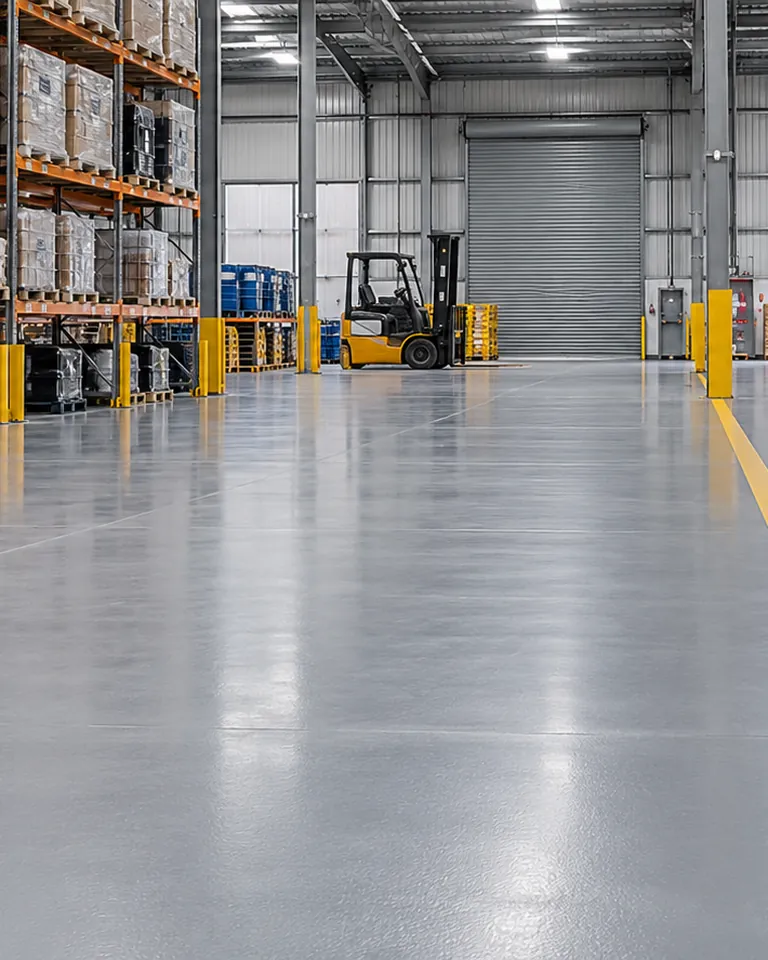
Heavy-duty coatings for warehouses, factories, workshops and loading areas that take forklifts, chemicals and constant wear. Tell us about the site and we’ll arrange a free quote from a local epoxy specialist.
- Free quotes
- Systems matched to forklifts and chemicals
- Line marking and staged work discussed
Where industrial coatings earn their keep
From warehouses in Unanderra and Kembla Grange to workshops around Port Kembla and Albion Park, industrial floors are judged on how they stand up to traffic, impact and spills.
Good for
- Warehouses and distribution centres
- Factories and manufacturing areas
- Mechanical and fabrication workshops
- Loading docks and dispatch areas, with a suitable topcoat
- Plant rooms, wash bays and chemical storage areas
Problems it fixes
- Concrete dust settling on stock and machinery
- Oil, fuel and chemical spills soaking into the slab
- Worn or peeling coatings in forklift lanes
- Damaged joints, spalling and impact damage
- Faded or missing line marking and walkways
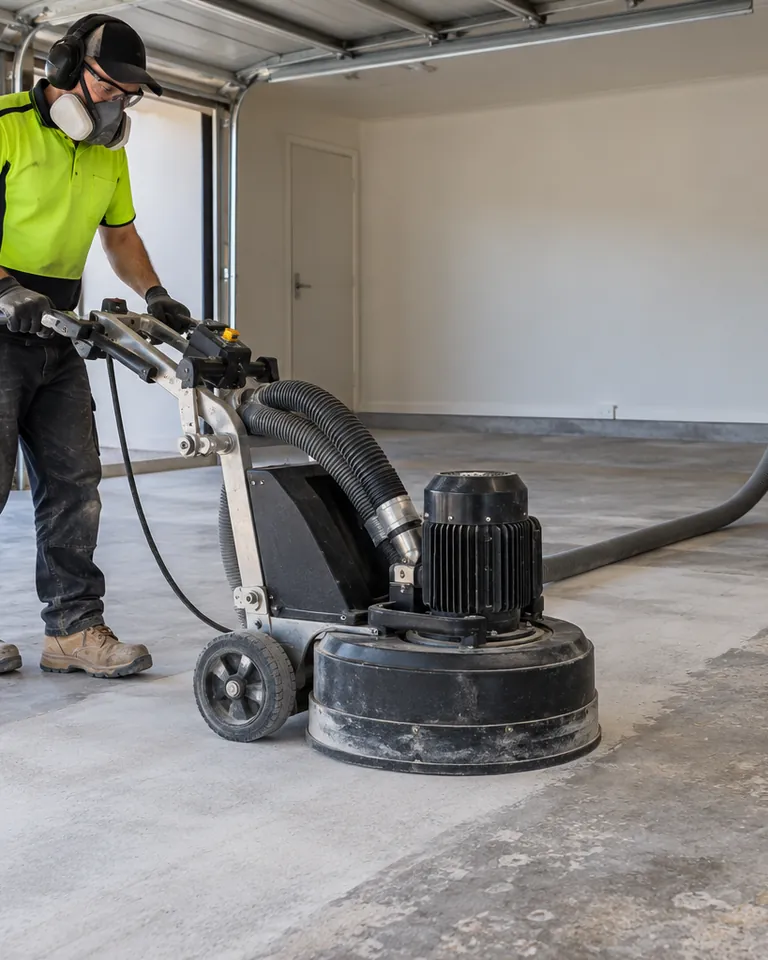
Heavy-duty floors start with heavy-duty preparation
Industrial slabs often carry oil contamination, curing compounds, old line marking and failed coatings. Expect diamond grinding or shot blasting, removal of weak or contaminated concrete, and repair of joints and spalled areas before any coating goes down.
Oil-soaked concrete may need extra cleaning or treatment, so ask your installer how they plan to deal with it on your site.
Concrete grinding and preparation · Repairs and coating removal
Industrial coating systems
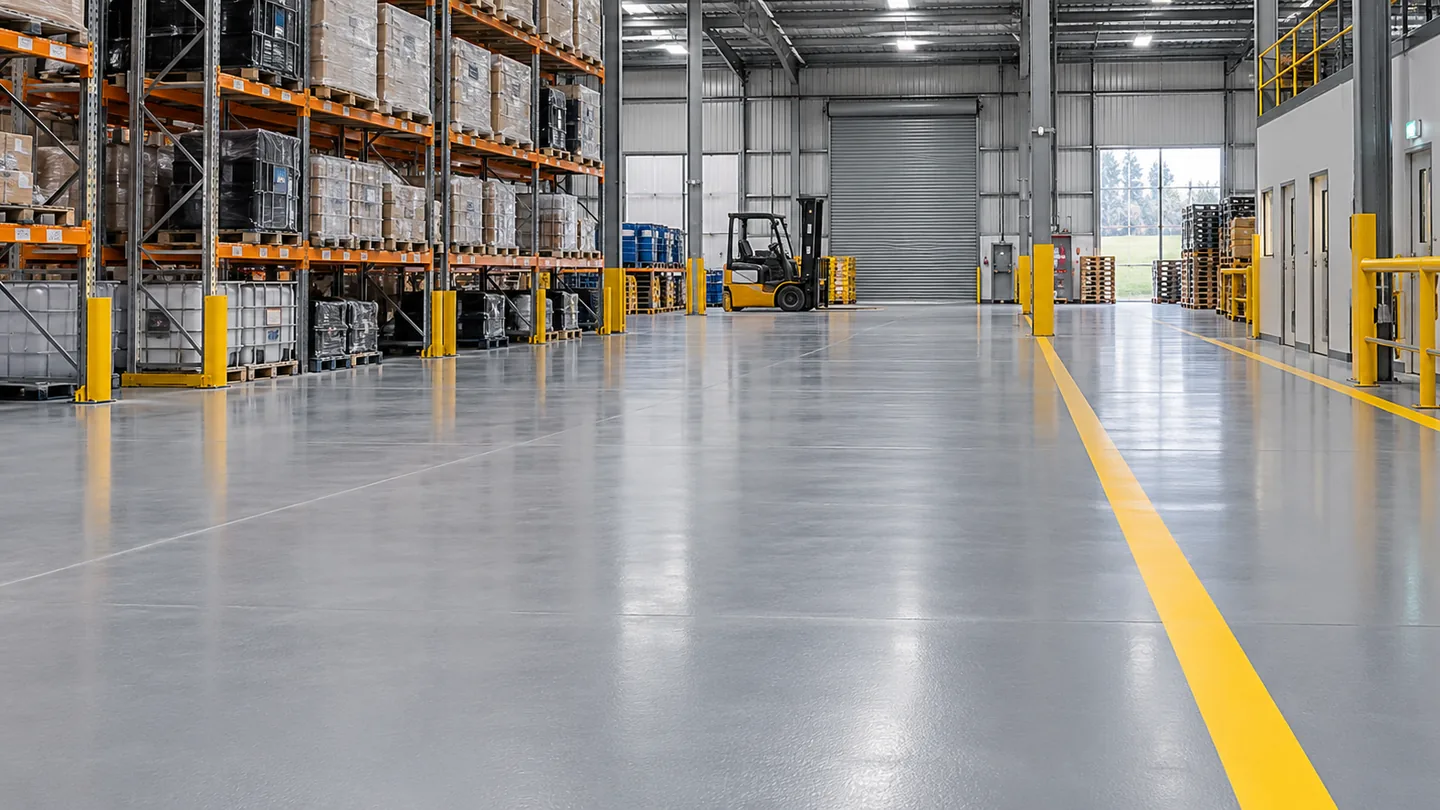
Industrial systems are chosen for load, chemicals and cleaning rather than looks. Ask your installer what system and thickness they propose for your use.
| Finish | Looks like | Suits | Worth knowing |
|---|---|---|---|
| Roller-applied epoxy | A thin, solid-colour coating | Light-duty storage and dry areas | Lower cost, but wears faster under forklifts and heavy carts |
| High-build epoxy | A thicker, solid-colour coating | Warehouses, workshops and forklift traffic | Better impact and wear resistance; the usual starting point for industrial floors |
| Self-levelling epoxy | Smooth, seamless and thick | Factories and clean production areas | Can even out minor unevenness, but needs a well-prepared slab |
| Chemical-resistant systems | Specialised coatings and toppings | Chemical storage, wash bays and hot areas | Chosen for the actual chemicals and temperatures; ask for the product data sheets |
How industrial jobs are usually run
Industrial floors are often coated in stages so the site keeps operating. Your installer will plan sections, access and curing around your operations.
Cure times
Foot traffic is often possible within about a day. Forklifts and heavy loads usually need longer, and full chemical resistance longer again. Ask for return-to-service times for each type of traffic in writing.
- Site assessment. Slab condition, contamination, traffic, chemicals and joints are checked.
- Plan the sections. Staging, access, shutdowns and the line marking layout are agreed.
- Prepare. The slab is ground or shot blasted, failed coatings removed, and joints and damage repaired.
- Apply the system. Primer, body coats and topcoat go down to the agreed thickness.
- Line marking and handover. Walkways and bays are marked, then the floor cures before forklifts return.
What an industrial coating does well
- Stops concrete dusting onto stock and machinery
- Resists oil, fuel and many chemicals
- Easier to sweep, scrub and keep clean
- A brighter floor that improves visibility
- Line marking for walkways, bays and hazard zones
Worth knowing
- Thin coatings can wear through under forklift traffic
- Chemical resistance varies by product, so match it to what you use
- Expansion and saw joints need proper detailing
- Damp or contaminated slabs need testing and may need special primers
What affects the price
Industrial floors are priced on the site and the system. These are the main factors.
- Floor area and the number of stages
- Contamination, failed coatings and repairs
- System type and thickness
- Line marking layout
- After-hours, weekend or shutdown work
Looking after an industrial floor
Sweep or scrub regularly with equipment and cleaners suited to the coating, and clean up chemical spills promptly. Keep forklift wheels in good condition, since damaged tyres can gouge the surface.
High-traffic lanes eventually need a recoat. Planning it before the coating wears through is cheaper than repairing the concrete underneath.
Related services
Industrial floor quotes across the Illawarra
Surrounding areas on request.
Industrial floor questions
Can the site stay open while the floor is coated?
Usually in part. Industrial jobs are often staged so one section is closed at a time, or done during shutdowns, nights or weekends.
How thick should an industrial coating be?
It depends on traffic, impact and chemicals. Forklift areas generally need a high-build system rather than a thin roller coat. Ask your installer what thickness they propose and why.
Will the coating handle forklifts?
A properly specified high-build or self-levelling system on a well-prepared slab is designed for forklift traffic. Tell your installer the type and weight of your equipment so they can specify the right system.
Can an oil-soaked slab be coated?
Oil-contaminated concrete has to be treated or removed first, or the coating will not bond. Your installer will assess how deep the contamination goes.
Can line marking be added?
Yes. Walkways, bays and hazard zones are commonly marked as part of the job. Bring a layout, or ask your installer to help plan one.
Are industrial coatings suitable for wash-down areas?
With the right system and texture. Wash bays and wet areas need slip resistance and chemical resistance matched to how they are cleaned.
Get a quote for your industrial floor
Tell us the type of site, the suburb, the approximate floor area and what the floor has to handle. Photos of the slab and any problem areas help us plan the job.
Get a free quote
Four details are all we need to get started. A local epoxy specialist will contact you to arrange your free quote.