
Home › FAQs
Epoxy Flooring Questions and Answers
Straight answers about cost, preparation, cure times, finishes and how this service works. If your question isn’t here, put it in the quote form and we’ll make sure it’s answered.
Cost and quotes
How much does epoxy flooring cost?
It depends on the size of the floor, the condition of the slab, how much preparation and repair it needs, the coating system and finish, and access to the site. Small floors usually cost more per square metre because setup and preparation are fixed costs. Your quote is based on the floor itself, or good photos of it.
Are quotes free?
Yes. There is no cost or obligation to request a quote.
Can I get a quote from photos?
Photos help a lot, and smaller jobs can sometimes be priced from them. Most floors are quoted after a site visit, because the slab condition affects the price.
Is there a travel charge?
That depends on how far the job is. Any travel cost should be shown on your quote, so ask if it isn’t clear.
Preparation
Why does epoxy peel?
The usual causes are poor preparation (no grinding, or only acid etching), moisture coming up through the slab, oil or other contamination, coating over an incompatible old finish, and thin coatings lifting under hot tyres.
What preparation should be included?
At a minimum: an assessment of the slab, mechanical grinding or removal of old coatings, crack and joint repairs, and thorough cleaning. Ask for the preparation steps to be listed on your quote.
Is acid etching enough?
Generally not for epoxy floors. It does not reliably remove sealers, oil or old coatings, and is a common reason coatings peel.
Can damaged or cracked concrete be coated?
Often, yes. Cracks, chips and spalling can usually be repaired before coating. Cracks that are still moving, or a slab with serious structural or moisture problems, may need other work first.
Can a new slab be coated?
Yes, once the concrete has cured. New slabs often need about four weeks, and your installer may test the moisture level first.
Installation and cure times
How long does installation take?
Many garage floors take two to three days, including grinding, coats and cure time between them. Larger commercial and industrial floors take longer and are often staged. Your installer will confirm the timeframe for your system.
When can I walk or drive on the floor?
It depends on the product and the temperature. Light foot traffic is often possible within about a day; vehicles usually need several days. Fast-curing systems such as polyaspartic can shorten this. Ask for the cure times in writing.
Do I need to empty the garage?
Yes. The floor needs to be completely clear for grinding and coating, and stays clear until it has cured.
Can the work be done after hours?
For commercial and industrial floors, many installers can stage the work or do it on nights and weekends. Mention your hours in the form.
Finishes and performance
Is an epoxy floor slippery?
A smooth gloss finish can be slippery when wet. Anti-slip aggregate can be added to the topcoat, and flake finishes give some texture. Tell your installer where the floor is and how it is used.
Can epoxy be used outdoors?
Standard epoxy yellows and breaks down in sunlight. Outdoor and sun-exposed areas need a UV-stable system, such as a polyaspartic or polyurethane topcoat. Ask your installer which system they propose.
Flake or solid colour?
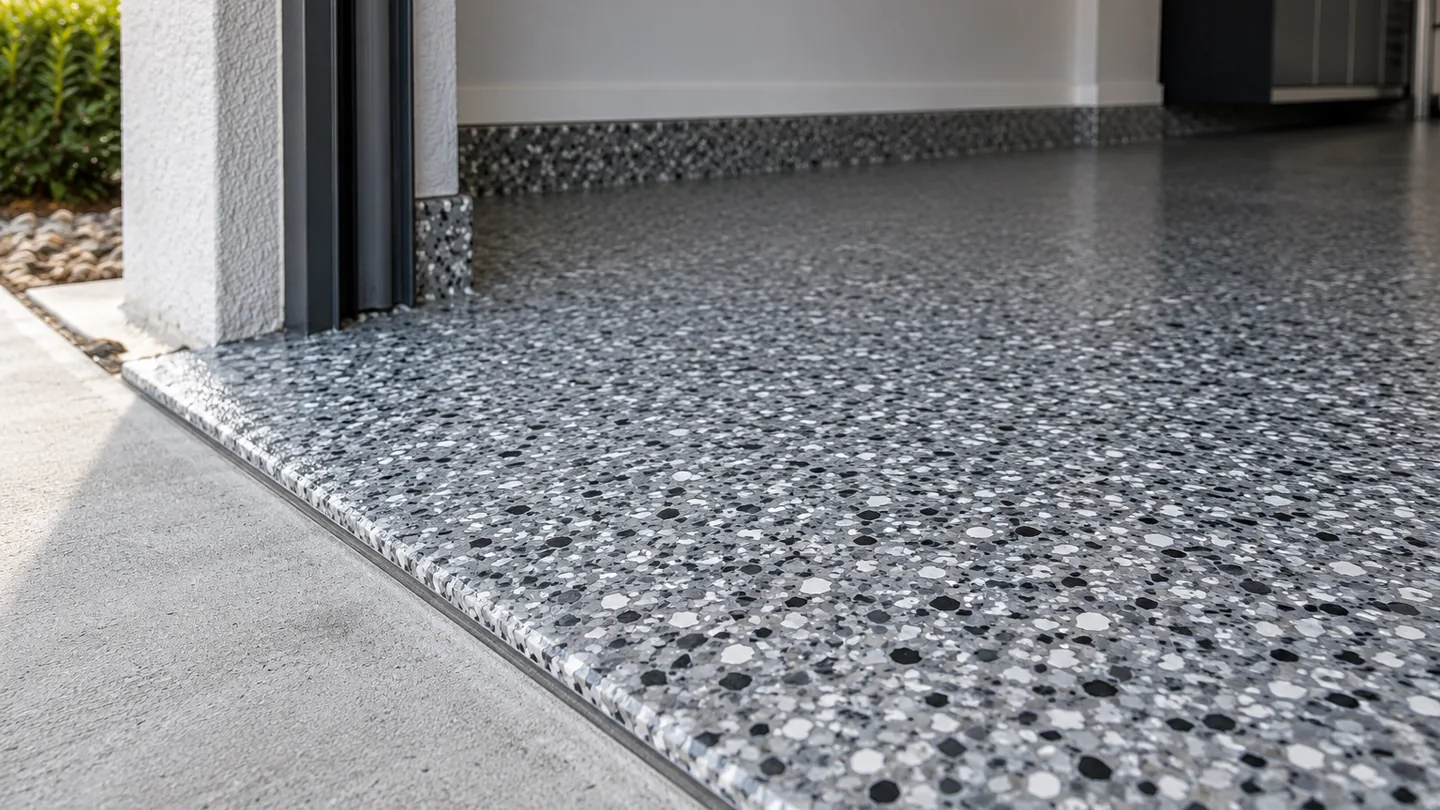
Flake hides dust and marks and adds some grip, which is why it is the most popular garage finish. Solid colour suits workshops and a clean, uniform look, but shows dust more.
Will hot tyres lift the coating?
Thin coatings can lift under hot tyres. A properly ground slab and a full system with a quality topcoat greatly reduce the risk.
How long does an epoxy floor last?
It depends on the preparation, the thickness and type of system, and how hard the floor is used. A well-prepared floor with the right system lasts far longer than a thin coating over unprepared concrete.
Care and maintenance
How do I look after an epoxy floor?
Sweep or vacuum regularly, mop with a pH-neutral cleaner, and clean up oil and chemical spills promptly. Avoid harsh cleaners unless your installer says the system is rated for them.
Can the floor be recoated later?
Often. Worn topcoats in high-traffic areas can usually be sanded and recoated without redoing the whole floor. Ask your installer what to expect.
About this service
Who does the work?
Illawarra Epoxy Flooring is an enquiry service. We pass your enquiry to one independent local contractor, who quotes the job and, if you go ahead, does the work. Any contract is between you and the contractor.
Who provides the warranty?
The contractor who does the work. Warranty terms are provided in writing with your quote.
What happens to my details?
With your consent, they are shared with one independent local contractor so they can contact you about a quote. See the Privacy Policy for details.
Which areas are covered?
Wollongong, Shellharbour, Kiama, the Shoalhaven and the Southern Highlands, with surrounding areas on request.
Still have a question?
Put it in the form with your quote request and it will be answered when you’re contacted about your quote.
Get a free quote
Four details are all we need to get started. A local epoxy specialist will contact you to arrange your free quote.